Entrainment
I recently read Mickey Hart’s beautiful book, Drumming at the Edge of Magic. Hart is best known as one of the two drummers of the Grateful Dead. His book tells the story of his lifelong fascination with percussion, and of his investigations into the ancient connection between rhythm and the human spirit.
Toward the end of the book, Hart introduced a concept that was new to me — entrainment.
It seems that if two vibrating systems are allowed to interact, and if their frequencies are already somewhat close to each other, they will become synchronized. The faster one slows down, and the slow one speeds up. Here’s a demonstration:
One of the greatest joys in my life is making music with other people. It’s great to play solo, but something different happens when two or more people make music together. I think a part of the reason is that the musicians, and often the audience, entrain with each other. They each keep their own time, and it won’t be identical at first. But as they listen to each other, and feel the common rhythms, their grooves start to adjust until they are literally on the same wavelength, and something happens inside them, one of the flavors of ecstasy. It is a bonding experience, and I feel a different connection with anyone I’ve entrained with in this way.
The beauty of this is that it’s a physical principle, which means it’s not something you have to “try” to do. Just relax and pay attention to what the other band members are doing, and if you are in the same room and have a chance to influence each other, the laws of nature will pull you toward entrainment. Do it long enough and everyone involved, including the listeners, is likely to experience a trance state. Hart should know, the Dead accomplished this thousands of times over their long career.
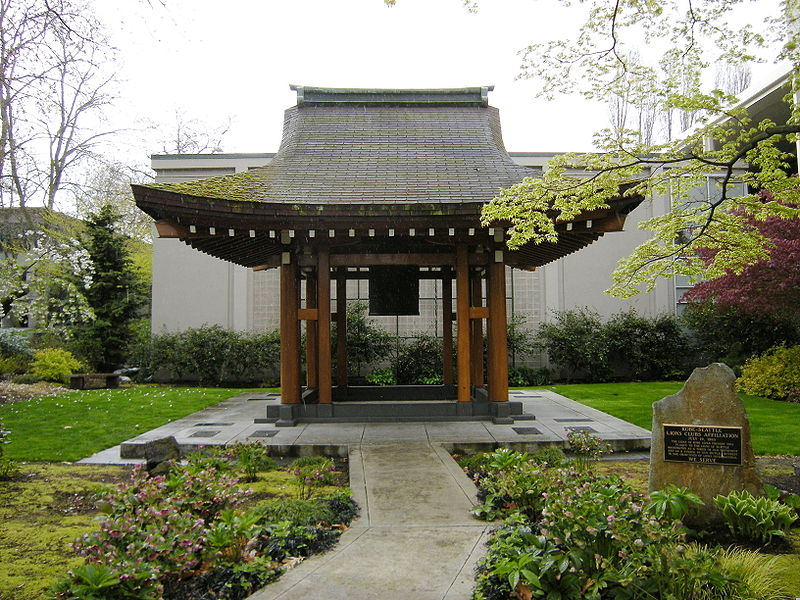 In his book, Mickey Hart talked about entrainment in the context of rhythm. But I immediately connected it with harmony. I sang Christmas carols professionally for years, with the Dickens Carolers quartets in Seattle. When all four voices blend perfectly, there is a delicious sensation of being a single voice. Once, four of us were walking back to the car from a show, and we ran across the Kobe Bell, a landmark feature of Seattle Center. We all stood with our heads up inside the bell, found a key that resonated with it, and sang O Holy Night. It was one of the peak experiences of my life. The bonding that occurred was almost frightening.
I think that singing harmony is like dancing together, only very fast.
Next: Resonance